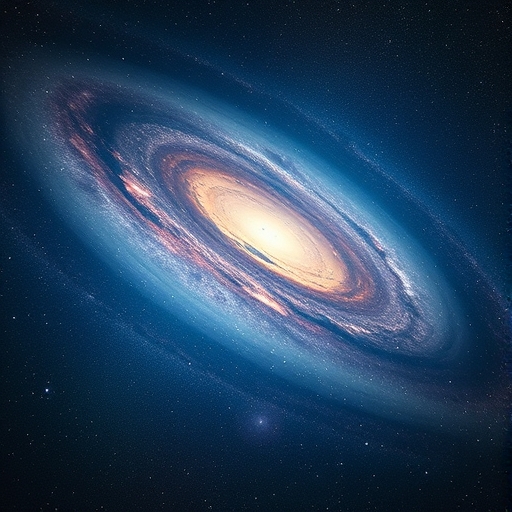
Space is often portrayed as a vast, silent expanse filled with stars and distant worlds. But beyond the beauty lies an invisible force that poses one of the greatest challenges to exploration: radiation.
Unlike on Earth, where the atmosphere and magnetic field provide natural protection, space exposes everything to a constant stream of high-energy particles. These particles move at incredible speeds, carrying enough energy to disrupt materials, damage electronics, and affect human health at the cellular level.
As humanity moves toward longer missions and deeper exploration, radiation is no longer a secondary concern—it is a defining factor in how missions are designed, executed, and sustained.
Understanding and managing this invisible threat is essential for the future of space travel. What Is Space Radiation?
Radiation in space consists of high-energy particles originating from various sources.
Some come from our nearest star, released during energetic events. Others originate from distant cosmic phenomena, traveling across vast distances before reaching spacecraft and habitats.
These particles can penetrate materials, interacting with atoms and causing changes at the molecular level.
Unlike radiation encountered in everyday life, space radiation is more intense and more difficult to shield against.
This makes it a unique and complex challenge. Why Earth Is Naturally Protected
On Earth, we are shielded from most radiation by two key factors: the atmosphere and the magnetic field.
The atmosphere absorbs many high-energy particles, while the magnetic field deflects others, reducing exposure.
In space, these protective layers are absent.
This means that spacecraft and their occupants are directly exposed to radiation, increasing the need for artificial protection.
Understanding this difference highlights the importance of developing effective shielding strategies. The Impact on Human Health
Radiation affects the human body at a fundamental level.
High-energy particles can damage cells, including DNA, increasing the risk of long-term health issues.
Short-term exposure can also have immediate effects, depending on intensity and duration.
For long-duration missions, cumulative exposure becomes a significant concern.
Protecting crew members requires a combination of shielding, monitoring, and operational strategies.
This is one of the most critical aspects of mission planning. Effects on Technology and Systems
Radiation does not only affect humans—it also impacts technology.
Electronic systems can experience disruptions when high-energy particles interfere with circuits. This can lead to errors, data corruption, or system failures.
Materials can degrade over time, affecting structural integrity and performance.
Designing systems that can withstand these conditions is essential for reliability.
This includes using radiation-resistant materials and incorporating redundancy to ensure continued operation. Shielding: The First Line of Defense
Shielding is the primary method of protection against radiation.
Materials are selected and arranged to absorb or deflect incoming particles, reducing exposure.
However, shielding is not straightforward.
Some materials are more effective than others, and increasing thickness adds weight, which is a critical consideration in space missions.
Balancing protection and efficiency is a key challenge.
Innovations in materials and design are helping improve shielding without excessive weight. Active Protection Strategies
In addition to passive shielding, active protection methods are being explored.
These involve creating fields or systems that can deflect or reduce radiation exposure.
While still in development, these approaches offer the potential for more efficient protection.
Combining passive and active methods could provide a more comprehensive solution. Monitoring and Early Warning Systems
Monitoring radiation levels is essential for managing risk.
Sensors track exposure in real time, providing data that can inform decisions.
Early warning systems can detect increases in radiation, allowing crews to take protective measures.
This may include moving to more shielded areas or adjusting activities.
Real-time awareness enhances safety and supports effective response. Designing Missions Around Radiation
Radiation influences mission design in multiple ways.
Trajectories may be selected to minimize exposure, and mission timelines may be adjusted to avoid periods of increased activity.
Habitats and vehicles are designed with protective features, ensuring that critical areas offer enhanced shielding.
Operational procedures are also developed to manage exposure, balancing mission objectives with safety.
This integrated approach ensures that radiation is addressed at every stage. The Role of Biology in Protection
Biological research is exploring ways to enhance natural resistance to radiation.
This includes studying how cells respond to exposure and identifying mechanisms that can reduce damage.
While still an emerging field, these insights could lead to new strategies for protecting human health.
Combining biological and technological approaches offers a comprehensive path forward. Implications for Deep Space Exploration
As missions extend beyond familiar environments, radiation becomes an even greater concern.
Longer travel times and increased exposure require more advanced protection systems.
This is particularly important for missions that aim to establish a sustained presence beyond Earth.
Ensuring that humans can operate safely in these conditions is essential for progress. Lessons for Earth
The study of radiation in space has applications on Earth.
Understanding how to protect against high-energy particles can improve medical treatments and safety in various industries.
Technologies developed for space can enhance protection and resilience in challenging environments.
These benefits highlight the broader impact of space research. Practical Insights for Readers
For those interested in radiation and its effects, consider these ideas: Understand how radiation interacts with materials and living systems. Explore the importance of protection and monitoring. Consider how design influences safety and performance. Reflect on how invisible forces can have significant impacts.
These concepts provide a foundation for understanding a critical challenge. Facing the Invisible Threat
Radiation is one of the most formidable obstacles in space exploration.
It is invisible, persistent, and complex, affecting every aspect of missions.
Yet it is also a challenge that drives innovation.
By developing new technologies and strategies, humanity is learning to navigate this unseen environment.
As we move further into space, mastering radiation will be essential.
It will determine not only where we can go, but how safely we can stay.
In the silent, radiant expanse beyond Earth, the ability to manage this invisible force may be the key to unlocking the next chapter of exploration.
Frequently Asked Questions
What is space radiation?
It is high-energy particles that travel through space and interact with matter.
Why is radiation a problem in space?
There is no atmosphere or magnetic field to provide natural protection.
How does radiation affect humans?
It can damage cells and increase health risks over time.
Can radiation damage spacecraft?
Yes, it can disrupt electronics and degrade materials.
What is shielding?
Using materials to block or reduce radiation exposure.
Are there active protection methods?
Yes, systems that attempt to deflect radiation are being developed.
How is radiation monitored?
Through sensors that track exposure levels in real time.
Why is this important for future missions?
Longer missions increase exposure, making protection essential.