
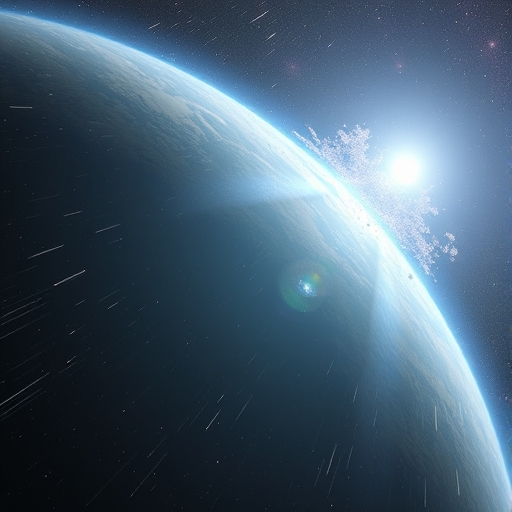
For generations, space has been a place humanity visits—briefly, cautiously, and with constant reliance on Earth. But a quiet shift is underway. The future of exploration is no longer just about reaching new worlds; it’s about staying there. The concept of off-world habitats—self-sustaining human settlements beyond Earth—is transforming from science fiction into a serious scientific and engineering pursuit.
At its core, building a home in space is one of the most complex challenges humanity has ever faced. It requires rethinking everything we take for granted: air, water, gravity, food, temperature, and even the psychological comfort of being grounded on a familiar planet. Yet, the potential rewards are immense. Establishing permanent habitats could unlock new frontiers of discovery, ensure long-term survival, and redefine what it means to be human. Why Off-World Habitats Matter
The motivation to build beyond Earth is driven by both curiosity and necessity. On one level, it is a natural extension of exploration—a desire to understand other worlds more intimately. Living on another planet or celestial body allows for deeper scientific study, real-time experimentation, and a more immersive understanding of extraterrestrial environments.
On another level, it is about resilience. Earth, while remarkably stable, is not immune to large-scale disruptions. Establishing independent habitats elsewhere creates a form of long-term security, ensuring that human civilization is not confined to a single location.
There is also the economic and technological dimension. Developing the systems required for off-world living—efficient recycling, compact energy generation, and advanced materials—can lead to innovations that benefit life on Earth as well. Choosing the Right Location
Not all places in space are equally suited for human habitation. The choice of location depends on several key factors: proximity, resource availability, environmental stability, and energy access.
Nearby celestial bodies are often the first candidates due to shorter travel times and easier communication. These environments offer a testing ground for technologies that could later be applied to more distant destinations.
Resource availability is another critical consideration. Water, for example, is invaluable—not only for drinking but also for producing oxygen and fuel. Locations with accessible water ice are particularly attractive, as they reduce the need to transport resources from Earth.
Energy access is equally important. Sunlight can be harnessed for power, but its availability varies depending on location. Some regions may experience long periods of darkness, requiring alternative energy solutions. Designing for Survival
Creating a livable habitat in space requires careful integration of multiple systems, each designed to operate reliably in extreme conditions.
Atmospheric control is one of the most fundamental requirements. A stable supply of breathable air must be maintained, with systems in place to remove carbon dioxide and replenish oxygen. These systems need to be highly efficient and capable of continuous operation with minimal maintenance.
Water management is another cornerstone. In space, water is too valuable to waste. Closed-loop systems are designed to recycle water from various sources, including humidity, waste, and condensation. The goal is to create a near-complete cycle where little to no water is lost.
Temperature regulation presents its own challenges. Without a protective atmosphere, external temperatures can vary dramatically. Habitats must be insulated and equipped with systems to maintain a stable internal climate.
Radiation protection is also critical. Outside Earth’s natural shielding, exposure to high-energy particles becomes a serious concern. Habitat designs often incorporate shielding materials or are placed in locations that offer natural protection, such as underground environments. The Role of Local Materials
Transporting materials from Earth is costly and inefficient. As a result, one of the key strategies for building off-world habitats is to use locally available resources.
This approach, often referred to as in-situ resource utilization, involves extracting and processing materials found on the surface of other celestial bodies. These materials can be used to construct structures, produce fuel, and support life systems.
For example, surface materials can be processed into building blocks or used as shielding. This reduces dependency on Earth and enables the construction of larger, more robust habitats.
The ability to “live off the land” in space is a major step toward sustainable exploration. Artificial Gravity and Human Health
One of the less obvious challenges of living in space is the absence of gravity. Over time, low-gravity environments can have significant effects on the human body, including muscle loss, bone density reduction, and changes in cardiovascular function.
To address this, researchers are exploring ways to simulate gravity within habitats. Rotating structures, for example, can create a centrifugal effect that mimics gravitational force. While technically complex, these designs could play a crucial role in maintaining long-term health.
In addition to physical health, mental well-being must also be considered. Living in a confined, isolated environment can be psychologically demanding. Habitat designs increasingly incorporate elements that promote comfort and connection, such as natural lighting, open spaces, and visual links to the outside environment. Food Production in Space
Sustaining a population requires a reliable food source. Transporting food from Earth is not practical for long-term missions, making local production essential.
Space-based agriculture focuses on growing plants in controlled environments. These systems must optimize light, water, and nutrients while minimizing space and resource use. Techniques such as hydroponics and aeroponics are commonly explored due to their efficiency.
Beyond providing nutrition, plants also contribute to life support systems by producing oxygen and helping regulate humidity. They can also have psychological benefits, offering a sense of normalcy and connection to nature.
The development of efficient food production systems is a key component of any sustainable habitat. Energy: Powering the Future
Reliable energy is the backbone of any off-world settlement. Without it, life support systems, communication, and daily operations cannot function.
Solar energy is one of the most accessible sources, especially in regions with consistent sunlight. However, energy storage becomes critical during periods of darkness.
Alternative energy systems are also being explored to provide continuous power. The goal is to create a resilient energy network capable of supporting all aspects of habitat life.
Efficiency is paramount. Every system must be designed to maximize output while minimizing waste, ensuring that limited resources are used effectively. Building for Expansion
The first habitats will likely be small and highly controlled, but the long-term vision involves growth. Designing with expansion in mind allows habitats to evolve from initial outposts into larger, more complex communities.
Modular construction is a common approach. By creating standardized components, habitats can be expanded incrementally as new modules are added. This flexibility supports both scalability and adaptability.
As populations grow, additional infrastructure will be needed, including research facilities, medical centers, and recreational spaces. Planning for these elements early ensures a smoother transition from exploration to settlement. Lessons for Earth
Interestingly, many of the challenges associated with off-world habitats mirror issues faced on Earth. Resource management, energy efficiency, and sustainable living are universal concerns.
The technologies developed for space—such as advanced recycling systems and efficient food production—have the potential to address similar challenges on our home planet.
In this way, the pursuit of off-world living is not just about leaving Earth; it is also about improving life here. The Path Forward
The journey toward off-world habitats is still in its early stages, but progress is accelerating. Advances in materials, robotics, and life support systems are bringing the concept closer to reality.
Each step forward builds confidence and capability, transforming ambitious ideas into practical solutions. While challenges remain, the direction is clear: humanity is preparing to become a multi-world species.
The dream of living beyond Earth is no longer distant. It is being designed, tested, and refined—one system at a time.
Frequently Asked Questions
What is an off-world habitat?
An off-world habitat is a living environment designed to support human life outside Earth, including systems for air, water, food, and protection from space conditions.
Why can’t humans live directly on other planets?
Most environments beyond Earth lack breathable air, stable temperatures, and protection from radiation, making them unsuitable for direct human survival.
How is water obtained in space habitats?
Water can be sourced from local ice deposits and is continuously recycled within the habitat to minimize waste.
What is artificial gravity and why is it important?
Artificial gravity is a simulated force that mimics Earth’s gravity, helping to maintain physical health during long-term space habitation.
How do habitats protect against radiation?
They use shielding materials, structural design, and sometimes natural features like underground placement to reduce exposure.
Can food really be grown in space?
Yes, controlled environment agriculture allows plants to grow efficiently, providing both food and oxygen.
What powers off-world habitats?
Energy typically comes from solar sources and other systems designed to provide consistent and reliable power.
Will people live permanently in space in the future?
While still in development, the goal is to create sustainable habitats that support long-term human presence beyond Earth.
Leave a Reply